
The Science of Second Chances: A Revolution in Criminal Justice
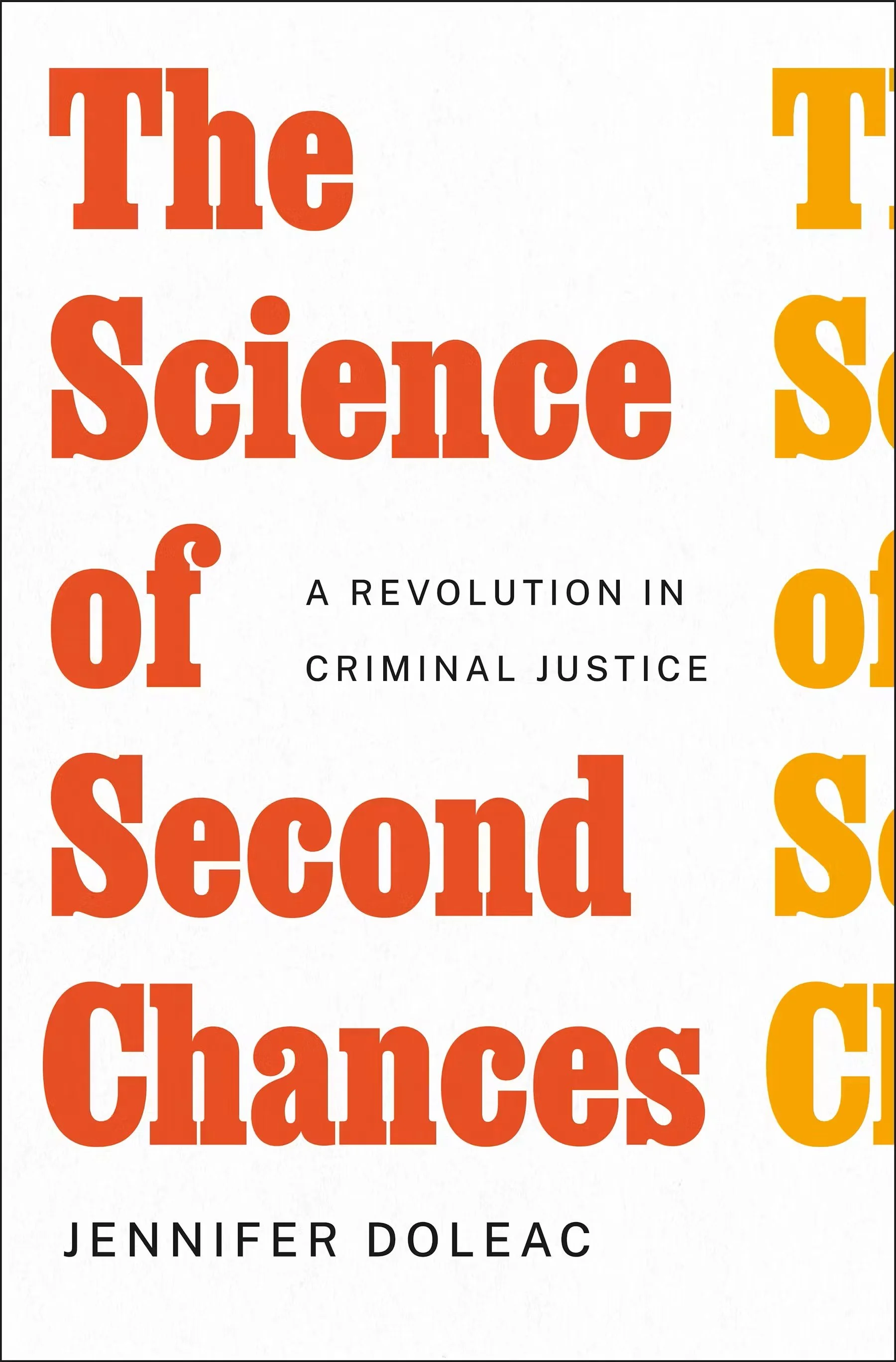
Doleac, Jennifer. The Science of Second Chances, Henry Holt and Company, 2026. Pp. 244. Cloth. $29.99.
One of my favorite parts of teaching criminal justice classes is introducing a law or legal idea that seems unfair or frustrating on the surface and then asking students to explain to me why the law exists. As each student offers their perspective, they begin to understand that particular law or idea from various angles. Our discussion ultimately helps the students to understand the law's goals and necessity. With this pedagogical approach, we work toward a holistic view of the criminal justice system.
The Science of Second Chances by Jennifer Doleac is missing this holistic view. Her lack of analysis of the why and necessity of certain areas of the justice system left me frustrated with many of her proposals. However, Doleac finds her stride and makes good arguments in the chapters that focus on incarceration, release, and second chances. And she does acknowledge some of the book’s shortcomings in her conclusion. However, once criminal justice professionals review her work, this book could meaningfully contribute to refining our system.
Doleac begins the first chapter with a rapid-fire suggestion of three minor changes that she argues would make deep impact: the expansion of DNA databases to include the DNA of those who have been arrested, using text reminders for court hearings, and mental health care recommendations for those exiting jail (23). While these ideas would appear to deter crime, increase successful court appearances, and provide services to prevent repeat offenders of minor offenses, her suggestions fail to address individual freedom from government involvement without due process, the actual role of the criminal justice system, and notifying individuals of mental health treatment versus actual follow-through. While she provides limited examples of improvement when her recommendations have been followed, I would argue that these are only temporary benefits rather than the long-term solutions she implies.
Chapters 2 and 3 propose that people will ultimately choose a better path for themselves. However, Doleac argues, laws to deter their criminal choices often become more burdensome and result in more offenses. While traditional deterrence assumes individuals will consider all the consequences of their actions, Doleac’s research indicates that people only calculate whether they will be caught. According to Doleac, using this single criterion in setting policy can decrease crime if we are more lenient. Unfortunately, I think the data she uses to support leniency is debatable and does not support her conclusions.
She uses natural experiments comparing different people who are arrested for similar offenses. This analysis does not clarify the details of each incident. These factors might affect whether cases are prosecuted or dropped. Additionally, she cites North Carolina where prosecutors stopped prosecuting minor offenses and saw fewer reports of the crime. However, it seems likely that crime is less reported because it is punished less. This inconsistency in analyzing weaknesses in her data seriously damages her argument and the validity of her conclusions. However, in the following chapters Doleac is more careful to understand what the system is trying to accomplish before making proposals to address each of those goals.
Chapters 4, 5, and 6 focus on potential changes in prisons and post-release reintegration. These are Doleac’s most successful arguments because she explores the rationale behind imprisonment and societal goals through punishment before showing how her research supports that reasoning. A comparison of procedures and prison programming from other countries shows changes that might be possible in our own system. Doleac utilizes research indicating that “crime is a young person's game” (82) alongside analyzing what goals society seeks in long term prison sentences. While I have concerns about the equitable comparison of prisons in different countries, these chapters are the most valuable in the book and the ones practitioners should read. One conclusion I found especially thought provoking was that if provided appropriate healthcare, some prisoners were healthier upon release because they were required to attend all treatments due to incarceration.
In these chapters, she reveals ways we can provide prisoners with the freedom to make good choices for their own lives both during incarceration and after. Her research of individuals with prison records (an obstacle to returning to the workforce) provides an enlightening examination of the effectiveness of Ban the Box and other movements. In Chapter 6, her research of the effectiveness of public benefits, money, and housing for those released from incarceration renders thought-provoking questions about the efficacy of governmental assistance. Those interested in finding new ways to help incarcerated individuals should read these chapters. We need to think creatively if we are to make changes in a system that is broken for the benefit of all involved parties.
In her final two chapters, Doleac addresses simple yet costly ideas to decrease crime related to children, teens, and young adults. Her research reflects that better access to education, nutrition, therapy, and healthcare decrease the likelihood of crime. What remains to be seen is whether our society views offering these benefits as cost effective. But these ideas should spur important debate among practitioners and policy makers.
In her conclusion, Doleac acknowledges the shortcomings and frustrations she has faced in her attempt to research these ideas and make changes within the criminal justice system. She identifies six challenges to adopting her proposals. Academics, policy makers, and practitioners should address these challenges and seek effective changes within the field. One challenge that requires further examination is her assertion that policy makers and practitioners are too focused on avoiding failure when failure is inevitable, and that their “goal should [instead] be to fail fast” (237). While I agree that failure is inevitable, we must remember that we are dealing with lives and livelihoods. A more responsible middle ground would be to identify environments where we can afford to fail safely before implementing changes in contexts with greater ramifications.
For those in Christian higher education, this book has potential as a classroom tool, particularly for instructors looking for ways to integrate Christian principles into criminal justice or social work courses. While Doleac does not make explicitly Christian arguments, her approach reflects the idea that as image bearers even those who have committed crimes deserve dignity and consideration. As I ask my students to sit with the discomfort of understanding a law before judging it, Doleac makes a similar request of her readers in her best chapters, and the results are worth considering. As I noted at the outset, Doleac is strongest when she allows the research to speak for itself, and it is in those moments that her work has the most to offer practitioners and policy makers working toward meaningful change.
Staci M. Rollins
Associate Dean, School of Humanities and Social Sciences & Department Chair, Criminal Justice and Legal Studies I North Greenville University